Best AI SEO Plugins for WordPress (2026 Guide)
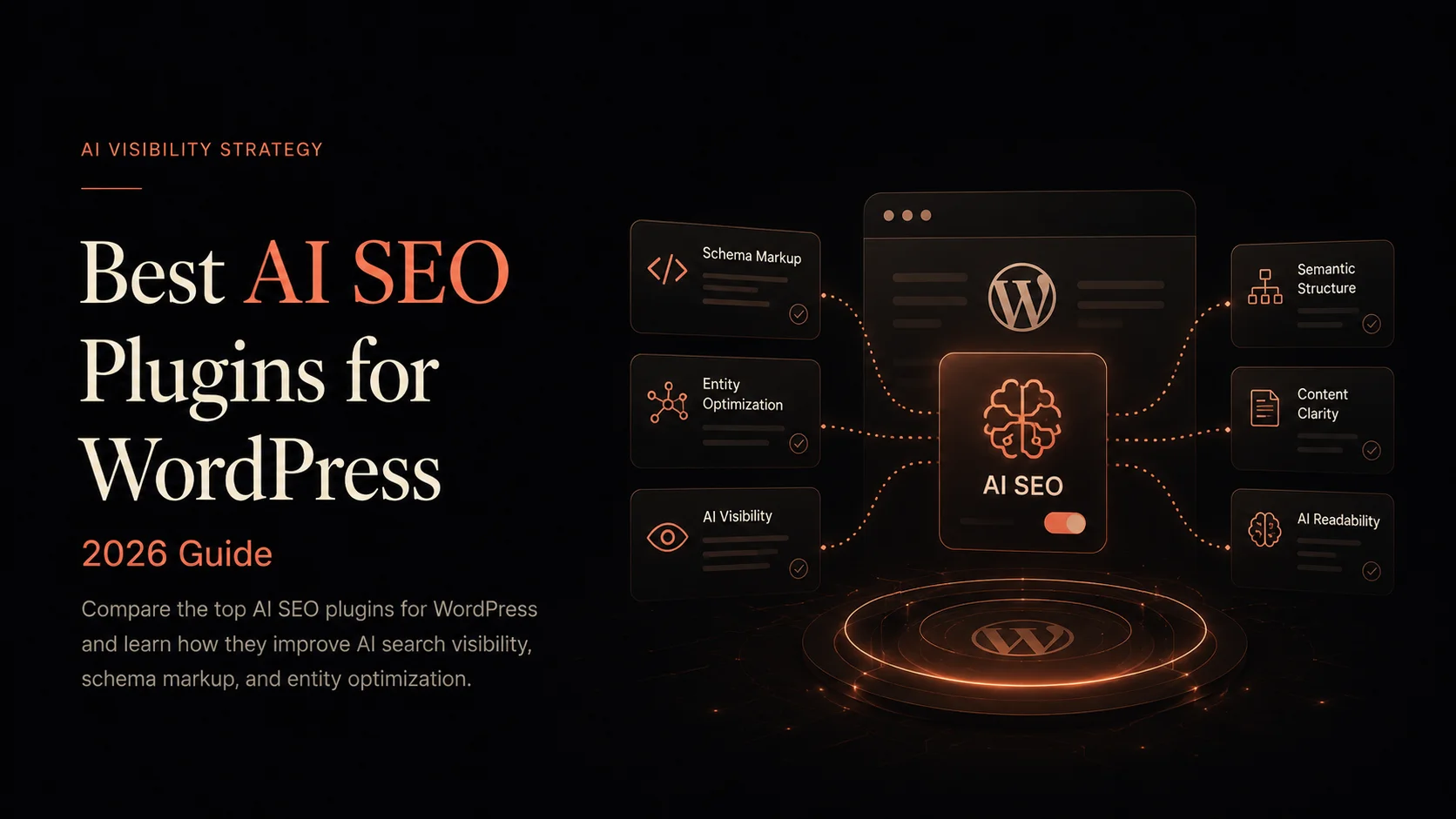
AI search is changing how websites get discovered online.
Instead of simply ranking pages based on keywords and backlinks, platforms like OpenAI ChatGPT, Perplexity AI Perplexity, and Anthropic Claude increasingly rely on semantic understanding, structured information, entity relationships, and contextual trust signals when deciding what sources to reference.
This shift has created a new category of tools: AI SEO plugins.
But not all plugins are built for the same purpose.
Some focus only on traditional SEO. Others inject basic schema markup. A newer generation of platforms is beginning to optimize websites specifically for AI-driven search systems and generative engines.
In this guide, we’ll break down the different types of AI SEO plugins for WordPress, what actually matters for AI visibility, and what website owners should look for moving forward.
What Is an AI SEO Plugin?
An AI SEO plugin helps websites improve their visibility in AI-powered search systems.
This can include:
- Structured data generation
- Schema markup automation
- Entity optimization
- Semantic content understanding
- AI search visibility analysis
- Machine-readable content improvements
- Internal semantic structure optimization
Traditional SEO plugins were designed primarily for Google’s classic ranking systems.
AI SEO tools are designed for a different environment: systems that attempt to understand websites rather than simply index them.
If you’re unfamiliar with the broader concept, this guide on what GEO (Generative Engine Optimization) means explains why AI search visibility is becoming increasingly important.
Traditional SEO Plugins vs AI SEO Plugins
Most WordPress SEO plugins were built for:
- metadata management
- XML sitemaps
- canonical tags
- keyword optimization
- indexing control
Those things still matter.
But AI systems evaluate websites differently.
Modern AI search systems increasingly rely on:
- semantic clarity
- structured relationships
- entity understanding
- contextual trust
- machine-readable organization
This is why many websites with strong traditional SEO still struggle to appear in AI-generated answers.
Our article on AI SEO vs traditional SEO breaks this shift down in more detail.
The Different Types of AI SEO Plugins
1. Traditional SEO Plugins
These include classic SEO tools focused on:
- titles
- meta descriptions
- indexing
- sitemap management
- social previews
They remain essential foundations for technical SEO but usually offer limited semantic optimization for AI systems.
2. Schema Markup Plugins
Schema plugins focus on generating structured data using Schema.org vocabulary.
This helps search engines and AI systems better understand:
- what a page is
- who published it
- what entities are discussed
- how information relates together
However, many schema plugins still rely heavily on static templates and generic markup.
This article on why schema markup matters in AI search explains why structured data quality matters far more than simply having schema installed.
3. AI Visibility & GEO Platforms
A newer category of tools focuses specifically on AI search visibility.
Instead of simply injecting schema, these systems attempt to improve:
- semantic consistency
- entity clarity
- contextual understanding
- page type alignment
- machine readability
- AI interpretability
These tools are closer to what many now call AI SEO or GEO (Generative Engine Optimization).
For example, Geoleaper’s AI search WordPress plugin focuses on helping websites become easier for AI systems to interpret and reference accurately.
Why AI Search Visibility Is Becoming Important
AI search behavior is growing rapidly.
Users increasingly ask:
- ChatGPT
- Claude
- Perplexity
- Gemini
- Copilot
…for direct recommendations instead of browsing traditional search results.
That changes the visibility game completely.
Instead of competing only for rankings, websites increasingly compete for:
- mentions
- citations
- inclusion
- semantic trust
- answer eligibility
This is why we described the shift as the rise of the AI citation economy.
What Actually Matters for AI Search Optimization?
Many people assume AI visibility is mainly about content generation.
It’s not.
In reality, AI systems increasingly evaluate whether a website is:
- understandable
- predictable
- structurally coherent
- machine-readable
- semantically aligned
That includes things like:
- schema quality
- page classification accuracy
- entity relationships
- internal semantic consistency
- organizational clarity
- content structure
This article on machine-readable websites and AI search visibility explains why this matters.
One of the Biggest Problems: Misaligned Page Types
Many websites accidentally confuse AI systems.
Examples include:
- product pages classified as articles
- informational pages carrying commerce signals
- FAQ-heavy pages misrepresented structurally
- inconsistent schema relationships
These issues reduce AI confidence.
We covered this problem in detail in our article about misaligned page types in AI search.
This is one reason newer AI SEO platforms focus heavily on semantic page interpretation rather than just metadata fields.
AI SEO Is Moving Toward Semantic Infrastructure
The future of SEO is becoming increasingly semantic.
Instead of optimizing isolated pages, websites are gradually becoming interconnected semantic systems where:
- entities connect together
- pages reinforce meaning
- context compounds over time
- structure influences interpretability
This concept is explored further in:
How to Choose the Right AI SEO Plugin
When evaluating AI SEO tools for WordPress, look for systems that improve:
Semantic Understanding
Can the platform help AI systems understand what your pages actually mean?
Structured Data Quality
Does it generate high-quality, contextual schema rather than generic templates?
AI Search Readiness
Does it optimize for AI visibility, citations, and semantic clarity — not just rankings?
Automation
Can it continuously adapt as your content changes?
Entity Optimization
Does it help reinforce relationships between topics, pages, organizations, and concepts?
Final Thoughts
AI search is still evolving.
But one thing is already becoming clear:
Websites that are easiest for AI systems to understand will likely gain a major visibility advantage over time.
Traditional SEO still matters. Backlinks still matter. Content quality still matters.
But the next layer of optimization is increasingly semantic, structural, and machine-readable.
That is why AI SEO plugins are rapidly becoming one of the most important new categories in the WordPress ecosystem.
If you want to evaluate how AI-ready your website currently is, you can run a free scan using the Geoleaper GEO Score Checker or explore the Geoleaper tools platform.