TL;DR
Generative engines don’t rank websites — they cite sources they trust. In the AI citation economy, visibility depends on whether AI systems can confidently reference your brand, products, and facts. Rankings, traffic, and keywords matter less than clear entities, consistent facts, and machine-readable structure. Websites with clean, continuously updated structured data become citable. Those without it become invisible — regardless of traditional SEO performance.
For years, visibility on the web followed a predictable logic:
rank high in Google, capture clicks, convert traffic.
That logic is breaking down.
Generative engines don’t behave like search engines. They don’t present ten blue links. They synthesize answers. They recommend brands. They cite sources selectively — creating what we call the invisible competition — and often without sending traffic at all.
This shift has created an entirely new AI visibility layer:
the AI citation economy.
In this new model, the most important question is no longer:
“Do you rank?”
It is:
“Does AI choose to reference you?”
And the difference between those two outcomes has nothing to do with keywords.
From Rankings to References
When a user asks ChatGPT, Perplexity, or Gemini a question, the system does not retrieve pages and rank them. It builds an answer from:
-
entities it recognizes
-
facts it trusts
-
relationships it understands
-
sources it considers reliable
Only a small subset of the web qualifies for this process.
Most websites are never considered — not because their content is bad, but because AI cannot confidently attribute facts to them.
This is the foundation of the AI citation economy:
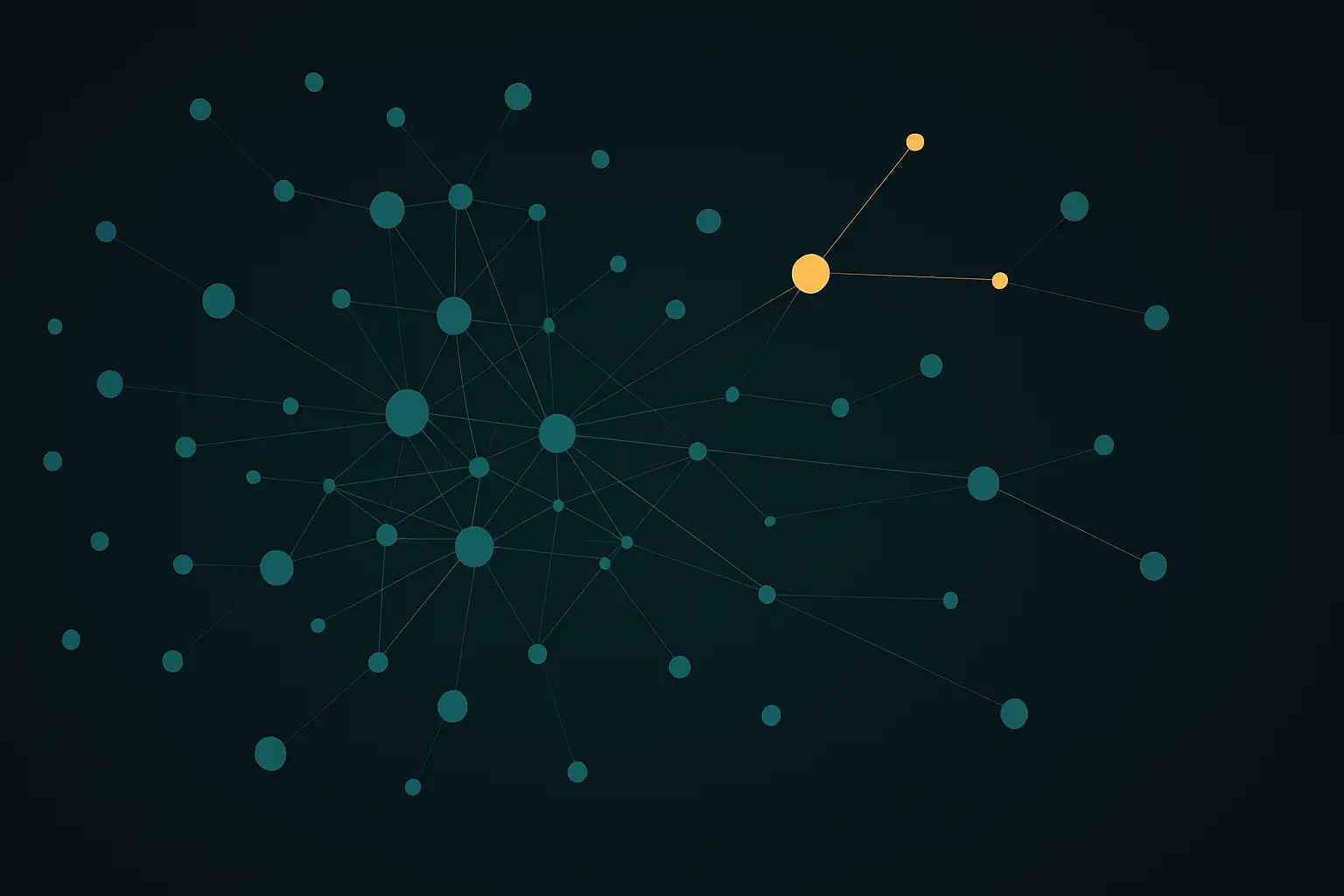
Visibility is granted to sources AI can reference, not merely index.
What Does It Mean to Be “Citable” to AI?
AI systems are fundamentally conservative. They avoid hallucinations, contradictions, and ambiguous claims. To generate confident answers, they need sources that are:
-
structurally clear
-
factually consistent
-
entity-defined
-
machine-verifiable
This is why AI citations cluster around the same types of sites:
-
well-structured publishers
-
authoritative databases
-
brands with clear schema graphs
-
sources with stable, repeatable facts
Citations are not earned through prose quality.
They are earned through information reliability.
Why Most Websites Are Invisible to the Citation Layer
From an AI perspective, most websites fail at least one of these requirements:
1. Unclear Entity Identity
AI can’t tell:
-
who the publisher is
-
what organization stands behind the content
-
whether two pages belong to the same entity
No entity = no attribution.
2. Ambiguous Facts
Prices in text.
Features in paragraphs.
Claims scattered across pages.
AI cannot reliably extract or verify this information.
3. Inconsistent Signals
The homepage says one thing.
The product page says another.
Schema (if present) contradicts both.
Trust collapses instantly.
4. No Machine-Readable Authority
Backlinks may signal popularity — but AI needs verifiable ownership of facts.
Without structured data, AI has no reason to trust your claims over anyone else’s.
The Shift: AI Doesn’t Reward Popularity — It Rewards Reliability
This is where traditional SEO intuition breaks.
In classic search:
-
authority could be inferred indirectly (links, traffic, brand signals)
In AI systems:
-
authority must be explicit
AI cannot assume.
It must validate.
That validation happens through:
-
structured data
-
entity graphs
-
schema relationships
-
historical consistency
The result is a hard truth:
Many sites with strong SEO metrics are completely absent from AI answers.
And many smaller sites with clean, structured data are heavily referenced.
How AI Decides Who Gets Cited
While no AI system publishes its internal weighting, citation behavior follows consistent patterns:
Step 1: Entity Recognition
AI identifies entities relevant to the question:
-
brands
-
products
-
services
-
concepts
If your site does not clearly define itself as one of these entities, you’re excluded immediately.
Step 2: Fact Availability
AI looks for explicit facts:
-
definitions
-
specifications
-
attributes
-
relationships
Schema markup is the fastest path to these facts.
Step 3: Trust Scoring
AI evaluates:
-
consistency across pages
-
alignment between content and structured data
-
historical stability of information
-
corroboration with other sources
Step 4: Answer Assembly
Only sources that pass these checks are eligible for:
-
citations
-
mentions
-
brand inclusion
-
product recommendations
This is not ranking.
This is source selection.
The Critical Difference Between “Visible” and “Citable”
A page can be:
-
indexed by Google
-
ranking well
-
receiving traffic
And still be uncitable for AI.
Because AI citation requires something else entirely:
A clean, machine-readable representation of truth.
This is why GEO exists.
Generative Engine Optimization is not about traffic.
It is about eligibility.
Eligibility to be:
-
referenced
-
trusted
-
reused
-
synthesized
Schema as Citation Infrastructure
Structured data is not just metadata.
It is citation infrastructure.
Schema tells AI:
-
who you are
-
what you offer
-
which facts belong to you
-
how entities relate
-
where authority originates
Without it, AI has no stable anchor for attribution.
With it, your site becomes:
-
a data source
-
an entity node
-
a reference point
This is why schema-driven sites appear repeatedly across AI answers, even when they are not “ranking #1” anywhere.
Why Manual Optimization Fails in the Citation Economy
Many teams attempt to add schema manually.
This approach breaks immediately because:
-
schema must reflect the actual content
-
facts change over time
-
entities evolve
-
relationships expand
-
errors compound
One outdated price.
One missing field.
One contradictory page.
AI trust drops.
In a citation economy, accuracy is binary:
you are either trusted or ignored.
The Role of Continuous GEO
To remain citable, a site must maintain:
-
complete structured data
-
synchronized with content
-
updated automatically
-
consistent across the entire domain
-
aligned with entity definitions
This is not a one-time optimization.
It is an ongoing system.
That is what modern GEO platforms enable:
-
continuous validation
-
entity graph maintenance
-
AI-ready consistency
Not to “optimize rankings” — but to stay reference-worthy.
What This Means for Brands and Publishers
In the AI citation economy:
-
Traffic is no longer guaranteed
-
Visibility is not always clickable
-
Attribution matters more than position
Your brand may be mentioned without a link.
Your product may be recommended without a visit.
Your data may shape decisions invisibly.
The winners will be the organizations that understand this early:
AI visibility is about being trusted as a source, not discovered as a page.
The New Visibility Question
Going forward, the most important GEO question is not:
“How do we rank higher?”
It is:
“Would an AI confidently cite us?”
If the answer is no, rankings don’t matter.
If the answer is yes, visibility compounds.
Conclusion: The Quiet Shift That Changes Everything
The AI citation economy is not coming.
It is already here.
Most websites are still optimizing for a web that no longer exists — one where visibility meant clicks and rankings.
Generative engines have introduced a new layer:
-
reference
-
trust
-
attribution
Schema and structured data are not SEO tactics in this world.
They are the language of credibility.
And GEO is the discipline that ensures your site speaks that language fluently — every day, at machine speed.
Those who adapt will be cited. See our plans to start building AI visibility today.
Those who don’t will slowly disappear — not from search, but from relevance.