
Generative AI engines don’t search the web the way Google does. They respond to intent — questions, prompts, and reasoning paths. Geoleaper’s Intent Engine analyzes your existing pages to understand what user intents they already satisfy, which AI prompts they should appear in, and where semantic gaps prevent AI systems from recommending your content.
All optimization happens alongside your current SEO setup — never against it.
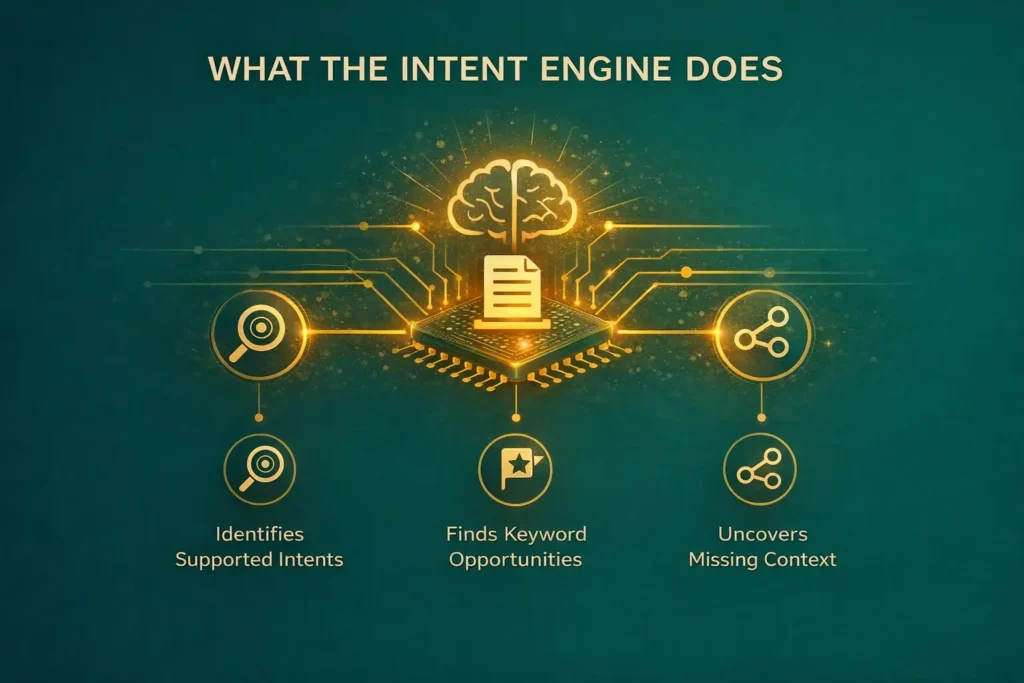
What the Intent Engine Does
The Intent Engine continuously reads and interprets your page content the way generative AI models do.
It identifies:
The intents and prompts your page already supports
High-value prompts you should appear in but don’t
Missing entities, relationships, and context AI engines expect
Based on this, Geoleaper enhances your content’s semantic completeness so AI systems can confidently reference, cite, and recommend it.
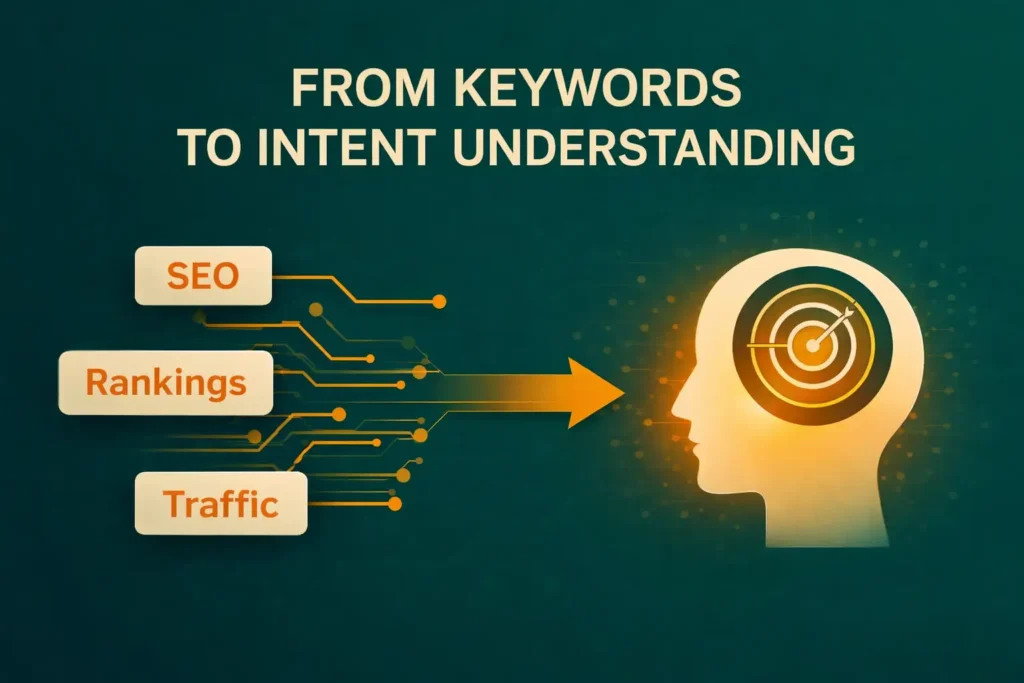
From Keywords to Intent Understanding
Traditional SEO optimizes for queries.
AI systems optimize for intent.
Instead of asking “Which keywords should this page rank for?”, the Intent Engine asks:
What problem does this page actually solve?
What follow-up questions would a user ask next?
Which prompts would logically require this information?
This allows your content to surface in AI-generated answers — not just search results.

Built to Protect Your Existing SEO
We never overwrite, rewrite, or disturb the content that drives your rankings.
The Intent Engine:
Works in parallel with your current SEO structure
Avoids modifying ranking-critical elements
Adds semantic depth without changing intent or layout
This ensures your organic positions remain stable while your AI visibility grows.
How we do it:
Content interpretation — The page is analyzed as a semantic system, not a keyword set
Intent mapping — Relevant prompts and AI reasoning paths are identified
Gap detection — Missing entities, explanations, or contextual signals are found
Safe enhancement — AI-readable structure and meaning are reinforced without SEO risk
Continuous updates — As AI behavior evolves, your content stays aligned
Why it matters:
AI engines don’t guess.
They recommend content they understand and trust.
If your site lacks semantic completeness, it won’t be referenced — even if it ranks #1 in Google. The Intent Engine ensures your content meets the standards AI systems silently apply when choosing what to surface.
Who needs it:
Sites with strong SEO that don’t appear in AI answers
Brands that want AI visibility without ranking volatility
Teams that can’t afford manual prompt optimization
Businesses preparing for AI-first discovery
Intent Engine - FAQ
Does the Intent Engine change or rewrite my existing content?
No. The Intent Engine does not overwrite, rewrite, or replace your existing content. It works alongside your current pages, enhancing semantic clarity and intent alignment without altering ranking-critical text, layout, or structure.
How is this different from traditional SEO optimization?
Traditional SEO focuses on keywords and queries. The Intent Engine focuses on understanding why a page exists — what problem it solves, which follow-up questions it answers, and which AI prompts logically require it. This allows your content to appear in AI-generated answers, not just search results.
Can this affect my current Google rankings?
No. The Intent Engine is designed to protect existing SEO performance. It avoids modifying elements that influence rankings and instead adds semantic depth in parallel, ensuring stability while expanding AI visibility.
Which AI systems does the Intent Engine optimize for?
The Intent Engine is built to align content with how modern generative AI systems reason and select sources — including engines like ChatGPT, Perplexity, and Claude. It focuses on shared underlying behavior, not platform-specific tricks.
Who benefits the most from using the Intent Engine?
The Intent Engine is ideal for sites that already rank well in search but are missing visibility in AI answers, brands that want AI exposure without SEO risk, and teams preparing for AI-first discovery without manual prompt engineering.