TL;DR
-
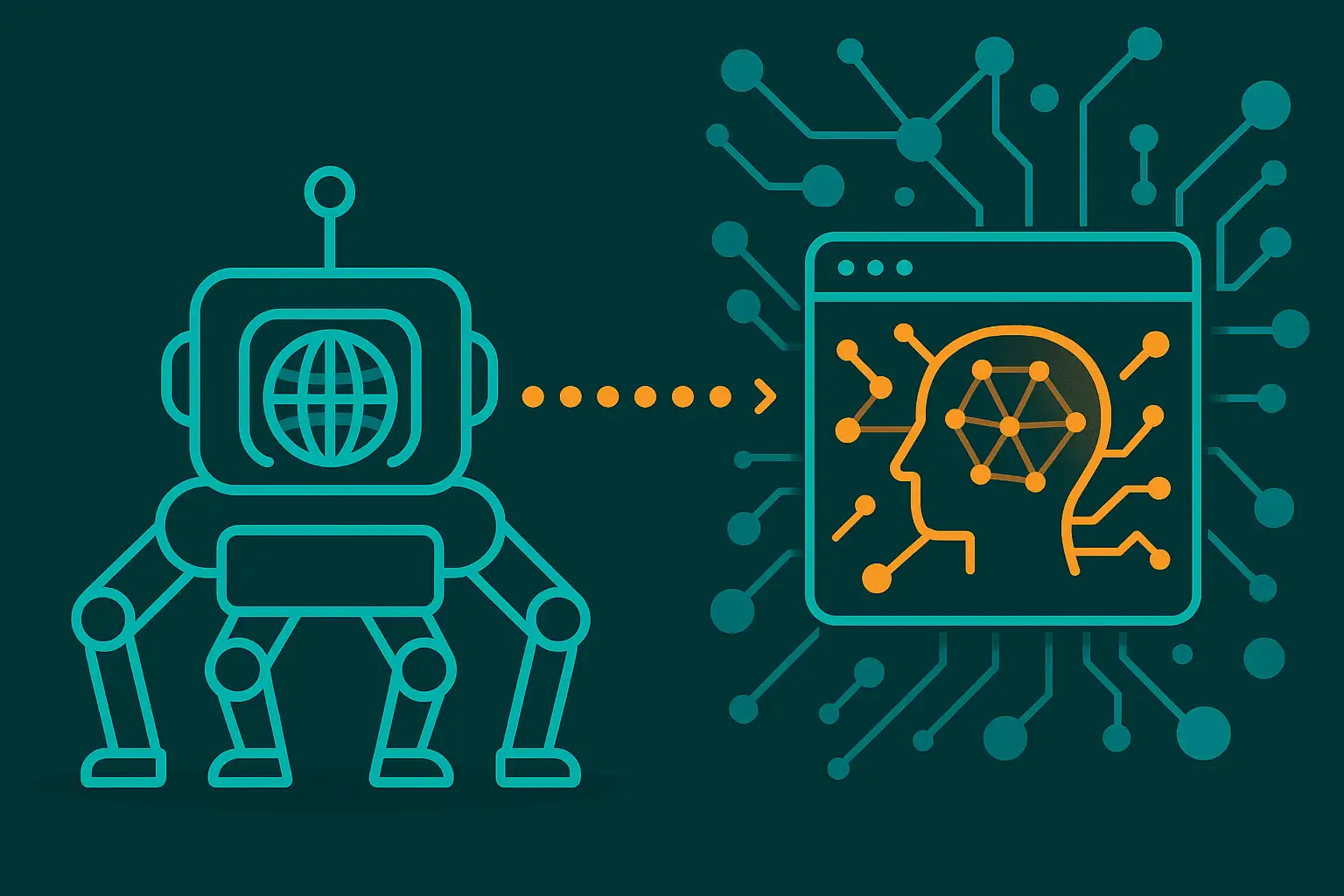
The crawl era was about being indexed.
-
The comprehension era is about being understood. This is what GEO addresses.
-
Schema markup, entities, and structured data are now the grammar of visibility.
-
GEO automation — through tools like the Intent Engine — ensures your site keeps pace with AI comprehension — continuously.
Search engines crawled the web.
Generative engines will understand it.
Make sure your website is one they can read — because 90% of the web is currently invisible to AI.
For nearly three decades, the web has been powered by crawlers.
Every click, every ranking, every search result began the same way — with a bot scanning pages, indexing content, and matching text to keywords.
That era is ending.
The new generation of AI systems doesn’t crawl; it comprehends.
And that shift is redefining what visibility means on the internet.
In the age of ChatGPT, Claude, and Perplexity, your website isn’t just competing for clicks — it’s competing for understanding.
The End of Crawl-Based Discovery
Crawlers were built for a simpler web.
They moved through links, parsed text, and decided relevance based on measurable patterns — keyword density, backlinks, and meta tags.
Google’s algorithm evolved, but its foundation remained: visibility depended on how well you could be indexed.
Now, the web is being reinterpreted by large language models — systems that don’t just record data but learn from it.
Generative search engines no longer look for words. They look for meaning.
And meaning can’t be crawled; it must be understood.
From Indexing to Interpretation
When you ask a generative engine a question — say, “What’s the best way to optimize structured data for AI?” — the system doesn’t just retrieve existing web pages.
It synthesizes an answer from what it knows.
That knowledge comes from:
-
Structured data (schema markup and JSON-LD)
-
High-credibility sources with traceable entities
-
Contextual relationships between pages, brands, and topics
In other words, AI visibility is no longer about having your content found — it’s about having it understood and trusted enough to be part of the answer.
This is the shift from crawl-based visibility to comprehension-based visibility.
Why the Old Model No Longer Works
Most websites are still built for crawlers.
They rely on HTML hierarchies, keyword optimization, and backlink strategies that assume a ranking system still functions like Google circa 2015.
But here’s the reality:
AI systems don’t rank. They reason.
Instead of saying “this page is number one,” they ask:
“Which sources make sense together to produce the best possible answer?”
That’s why a beautifully optimized SEO page can still be invisible to AI.
If your content isn’t structured, connected, and credible in machine terms, it won’t appear in generative answers — no matter how good it is.
The New Rules of Visibility
The comprehension era introduces a new kind of optimization logic — one that focuses on meaning, context, and credibility instead of links and text.
Here are the three new visibility drivers:
1. Machine-Readable Meaning
Your content must explicitly declare what it represents.
A “Product” isn’t just a page with a price — it’s a defined entity with attributes (@type: Product, brand, offers, availability, etc.).
An “Article” must declare its headline, author, and datePublished.
When AI systems like ChatGPT browse your page, they’re not reading — they’re parsing relationships.
If your schema is missing or inconsistent, comprehension fails.
2. Entity Connectivity
The web AI sees isn’t made of pages — it’s made of entities.
These are people, brands, ideas, and objects connected by relationships.
When your site defines entities (Organization, Person, Product, CreativeWork) and links them via sameAs, mentions, and about, you’re creating machine-level connections that AI systems can map.
This is what allows ChatGPT or Perplexity to say:
“Geoleaper is a WordPress plugin that automates schema markup for AI visibility.”
That sentence isn’t “guessed” — it’s understood because your schema and relationships make it discoverable.
3. Continuous Context
AI comprehension is dynamic.
The context around your entities — how often they’re updated, referenced, and validated — determines how visible they remain.
A static schema might earn visibility for a few months, but as new AI models train on fresher data, unmaintained entities fade into irrelevance.
This is why continuous GEO optimization matters — it keeps your structured data alive and evolving with the ecosystem.
What AI Actually Sees
Let’s be clear: AI systems don’t see your website the way users do.
They see a blend of three data layers:
-
HTML Structure: Headings, links, metadata, and on-page relationships
-
Structured Data: Schema markup, JSON-LD, microdata
-
Entity Graphs: How your content connects to other verified sources
If those layers aren’t aligned, AI interprets your page as fragmented — multiple meanings, no clear purpose, low trust.
But when they’re synchronized, your site becomes machine-coherent — easy to parse, easy to cite, easy to trust.
GEO: Optimization for the Comprehension Era
Generative Engine Optimization (GEO) exists because AI comprehension requires structure, not speculation.
At Geoleaper, we analyze your site not for ranking, but for readability by AI systems.
Our analyzer crawls your site, extracts schema, and checks for:
-
Completeness and consistency
-
Alignment between visible content and structured data
-
Missing entities or broken relationships
-
Credibility markers (author, publisher, sameAs links)
You get a GEO Score (1–100) — a measurement of how well your site communicates with AI.
And with our automated optimization engine, that clarity stays consistent as your content evolves.
Every time you edit, publish, or update, your structured data updates too — keeping your website comprehensible to the machines shaping the web.
Why This Shift Matters
Search engines used to reward visibility hacks — clever metadata, backlink patterns, keyword tuning.
Generative engines reward semantic integrity — truth, clarity, and context.
In practical terms, that means:
-
A small, well-structured site can outperform a large, keyword-rich one.
-
A consistent entity graph is more valuable than 100 backlinks.
-
Automation beats manual optimization because comprehension is continuous.
Visibility now depends on how well you teach AI what your website means.
And that’s not something a crawler can guess — it’s something you have to show.
The Future: A Web Built for Understanding
We’re moving toward a web that’s no longer just searchable — it’s explainable.
Where websites aren’t ranked by algorithms, but recognized by intelligence systems.
Where every piece of content is part of a larger network of verified meaning.
The transition from crawl to comprehension isn’t just technical — it’s philosophical.
It’s about moving from being found to being understood.
And in that new web, Geoleaper exists to bridge the gap — helping every website speak the language of machines fluently.